Posted on

New York to Standing Rock: The Lakota Language Challenge

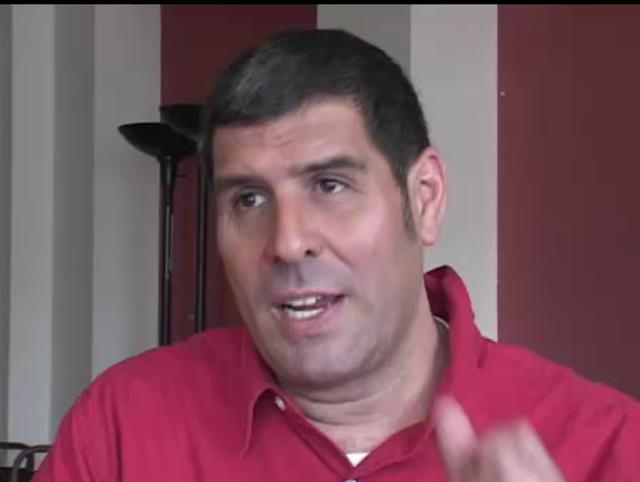
The Lakota Summer Institute and Lakota Language Consortium are proud to announce distinguished theater professional Steve Elm will direct a new play this summer as the culmination of the annual Lakota Summer Institute – a play that will be performed entirely in the Lakota language.

“Language, to me, is the key to theater,” says Steve Elm, who is the former Artistic Director of Amerinda Theater in New York City, and former Editor of the literary journal Talking Stick Native Quarterly. “I became an actor when I learned to love language.  I became a writer because I wanted to create language. I became a director so that I may translate language.”

Elm, who is Oneida, faces a language challenge this summer that is different from anything he’s ever done before: directing Lakota language teachers – non-actors — in Lakota, a language Elm does not speak.

Iktómi Lečhála Tȟawíčutȟuŋ (Iktomi’s New Wife) is a stage adaptation of two Lakota-Dakota tales about the trickster Iktomi: “Iktomi and the Ignorant Girl” and “Iktomi’s Blanket.” In the play, Iktomi has another fight with his old wife and he is determined to get a new one – and he will put on a dress to do it.

The language teachers who will rehearse and perform the play under Elm’s direction are fluent and proficient Lakota speakers from tribal school systems in North and South Dakota, as well as advanced language students. They are co-creating this production with improvisation and music under Elm’s guidance, while attending a special three-week class at LSI, Lakota Drama and Performance.

Other tribal colleges in the region, most notably Oglala Lakota College, have theater and drama courses to express Lakota identity with the language, but the LSI class intends to help Lakota language teachers build theater skills for use in their classrooms, to make learning and speaking Lakota exciting and fun.

Elm comes to the production with a background in professional acting, directing and playwriting, as well as educational theater development and teacher training. Trained at London’s Rose Bruford College and with professional credits in London and Manchester, Elm has performed and directed extensively for original Native American productions as part of festivals and for established Native American performance companies. With Gloria Miguel of Spiderwoman Theater, he co wrote her solo piece, Something Old, Something New, Something Borrowed, Something Blue, which he directed at New York Theater Workshop La Mama, ETC., and the Freed Center in Ada, Ohio.

“I have a passion for working with young people and non-professionals,” he says. “In the 1990’s I directed the New York City based American Indian Community House Youth Theater Project. There, a company of young Natives collaborated through improvisation, games, storytelling and discussion to create theater that resonated with their lives and had a profound effect on the community and served to educate and familiarize non-Natives with contemporary Indian youth. The plays were often raucous, often musical, usually funny, and always poignant. Most importantly, the plays were created by the young people themselves. My role was to guide, facilitate, and stage.

“I worked for many years with the Creative Arts Team at City University of New York, where I specialized in creating drama in education; again, focusing on the issues and concerns of young people. These theater experiences provided a forum in which the participants interacted with the performers by taking roles in scenes, suggesting different ways in which characters could behave, commenting and discussing the action. The line between performers and students was erased; thus providing deeply student centered learning, as well as offering those involved a chance to be immersed in theater and drama.”

Currently, he is a freelance director and a Master Teacher at the Wolf Trap Institute for the Performing Arts, working with early learners and training teachers in drama and storytelling.  In September Steve will join the New School of Northern Virginia as Director of Theater.

Elm sees the opportunity to work with Lakota language teachers, who will be acting in a language he doesn’t understand, “an honor and a challenge.”
Posted on

You’ll Be Seeing More of Us in June


During the three-week Lakota Summer Institute, June 2-20, LLC will send out daily briefs on the activities, people, and surprises of our annual teacher training / community get-together.

Emphasize “brief” – we’ll keep it cool, with pictures and captions and short updates.

It’s part of LLC’s new social media experiment – we’ve gathered tools like WordPress, MailChimp and SproutSocial, to coordinate our electronic contact with you.

The blitz is just for one month, to share a fun and exciting event with you in new ways.  We hope you’ll share it, too, with your friends who wonder what this Lakota language thing is all about.

When the dust settles, we’ll be back to our previous rhythm – with more and richer content, more sharing between members of our community, more information about language and learning.

Next year, come join us at LSI – and see where it’s all coming from!

Posted on

LLC’s Ten-Year Anniversary Starts Today

Today marks the 10th anniversary of LLC’s founding – and the beginning of a historic change for the better in the story of the Lakota language.  In May 2004, LLC launched with a small Board, affiliation with just one tribe and 15 Lakota and non-tribal schools ready to participate in a comprehensive, unified language revitalization plan.

Today, LLC’s curriculum is taught at more than 80 schools for five tribes, and reaches more than 24,000 students – not counting the individual learners who pick up the textbooks, CDs and New Lakota Dictionary for self-study.  After a decade of hard, hard work building relationships and watching Lakota language learning take off, LLC staff and Board can verify that:

Never doubt that a small group of thoughtful, committed citizens can change the world; indeed, it’s the only thing that ever has.  – -Margaret Mead

We are proud to count you among that group of committed citizens – language activists and caring supporters!

We have seen language activism stand up and take off running far beyond our own work – and that is a rare satisfaction.  The Lakota-Dakota Language Summit and the learner’s pages on Facebook prove that there is a demand for places where learners can gather and practice the language together.

It’s been a fantastic journey, a decade of startling growth, and we hope for many more. Here are some highlights of the past 10 years:

And this isn’t even mentioning the children’s picture books, the font bundle or the “Iktomi” plays!

Looking ahead to the next 10 years, LLC is already developing a Lakota Handbook as a complete, advanced grammar reference.   More apps, more audio-enhancement for the NLD, more Berenstain Bears episodes want to be translated and dubbed, and Rising Voices/ Hótȟaŋiŋpi will be finished and broadcast on PBS. And the first LLEAP graduates will be ready to start teaching!

So stay on board with us, the ride is just beginning!

Posted on

Dakota Language Gets Going!

The Dakota Language Society – better known as Dakhóta Iápi Okhódakičhiye (or DIO) – has let us know that their first Textbook, first Audio CD and first set of Posters are doing “tons” of pre-orders at their new web site store!

The DIO’s web site has information on the status of the Dakota language, including history of the written language, which originated with missionaries who believed that literacy was the key to Christianity. “In the 19th century Dakota people became literate in their language and wrote letters to each other,” this section tells. “Two Dakota newspapers were published in the Dakota language, along with readers, the bible, and a hymnal.”

DIO coordinates “Dakota Language Tables” for informal group study around the Twin Cities area. DIO estimates that there are about 28 fluent Dakota speakers left – 8 in Minnesota, and 20 in other states, including South Dakota, North Dakota, Nebraska and Montana.

Dakota and Lakota are so closely related, Dakota words and variations are included in both editions of the New Lakota Dictionary.

LLC Executive Director Wil Meya calls this launch by DIO “an important step because it expands what is already happening for language revitalization in the Plains region – it enlarges the speech community.”

We are proud to pass on the news of our Dakota friends’ exciting advance in their language revitalization work – and we wish them all the best with their new K-12 classroom materials!

Posted on

Other Tongues at LSI

Two new Native American language institutes will get off the ground in June 2014, running concurrently with the Lakota Summer Institute at Sitting Bull College.  Like LSI, both are focused on teacher training for second-language education with new textbooks for their respective languages, and on advanced language study for teachers and non-teachers alike.

The Crow Summer Institute will take place June 2-13.  The MandanHidatsaArikara (MHA) Summer Institute will take place June 2- 6.  It will be an extension summer session of Fort Berthold Community College in Fort Berthold, ND.  MHASI will move permanently to FBCC in 2015.

Each of these Nations has begun their own coordinated language revitalization effort, inspired by the Lakota model. Crow language teachers came to LSI in 2013 for an introduction to Total Physical Response teaching methods, applied to their new Level 1 textbook. They will be returning for continued study of Total Physical Response and also Crow Phonology.

The MHA Nation aims to revitalize three languages, all of which are highly endangered. While Hidatsa has several speakers still living, while Mandan is down to just one living speaker, and Arikara has none. The MHA Nation Education Department will introduce a Level 1 textbook and phonology course for each language at their Institute.

These tribes are working with  LLC’s sister organization, the Language Conservancy,  to establish best practices for language revitalization, which includes setting up the kind of community-building teacher training institutes that LSI has become known for.

It is still not to late to register for LSI — the deadline has been extended to May 30.

Posted on

Room Rates Drop for LSI!

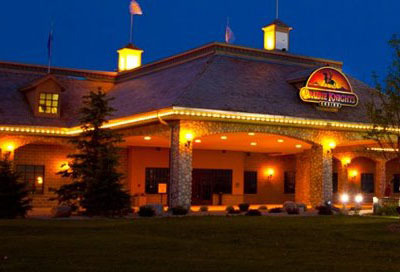
Great news — hotel room rates have been lowered at the Prairie Knights Casino Hotel for attendees of the Lakota Summer Institute! The previous $70/night rate has dropped to $50/night.

Plus, Sitting Bull College has opened up its dormitories for $10/night during LSI, Sunday June 1 to Saturday, Jun 21.

So you can still register here to attend LSI!  Don’t let the cost of a bed keep you away.

Prairie Knights Casino Hotel